Call or Text

What Are the Different Types of Dental Fillings?


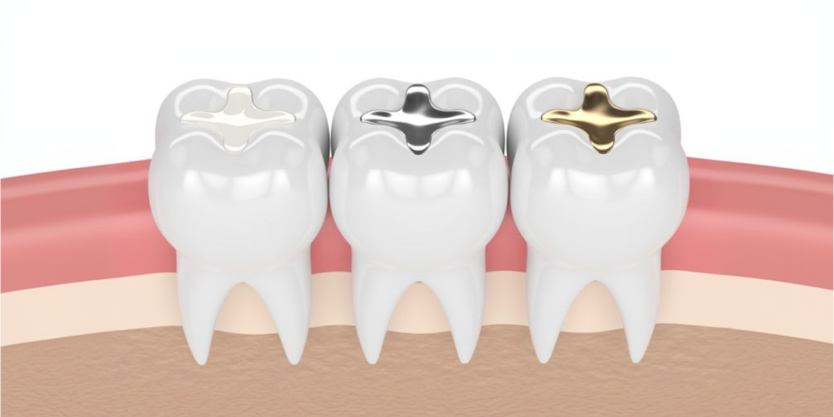
Discover the different types of dental fillings and how composite, amalgam, ceramic, glass ionomer, and gold compare in appearance, durability, cost, and use.
Dental fillings are used to repair teeth affected by cavities, minor fractures, or other areas of damage. The material used for a filling can affect its appearance, durability, cost, and where it works best in the mouth.
The main types of dental fillings include composite resin, amalgam, ceramic, glass ionomer, and gold. The right material depends on the size and location of the cavity, how much chewing pressure the tooth receives, and your cosmetic preferences.
Dental Filling Types at a Glance
| Filling Material | Appearance | Common Use | Key Advantage |
|---|---|---|---|
| Composite resin | Tooth-colored | Front and back teeth | Blends with natural teeth |
| Amalgam | Silver-colored | Mainly back teeth | Strong under chewing pressure |
| Ceramic/porcelain | Tooth-colored | Visible or larger restorations | Natural appearance and stain resistance |
| Glass ionomer | Tooth-colored | Small cavities, root surfaces, selected areas | Releases fluoride |
| Gold | Gold-colored | Selected back teeth | High durability |
The material that works best for one tooth may not be suitable for another.
Composite Resin Fillings
Composite fillings, also called composite resin fillings or white fillings, are made from a tooth-colored resin material.
Because the material can be matched to surrounding teeth, composite is commonly used when appearance matters.
Composite fillings can be used for:
Small to moderate cavities
Front teeth
Many back teeth
Chipped or worn areas of teeth
One advantage of composite resin is that it bonds directly to the tooth structure. However, its longevity can depend on the size of the filling, bite pressure, and where it is placed.
Amalgam (Silver) Fillings
Amalgam fillings are sometimes called silver fillings because of their metallic appearance.
Dental amalgam is made from a mixture of metals and has traditionally been used for cavities in back teeth where chewing forces are higher.
Amalgam may be considered because it is:
Strong
Durable
Able to tolerate significant chewing pressure
Less sensitive to moisture during placement than some other filling materials
Its main drawback is appearance, since the filling does not match the natural color of the tooth.
Ceramic (Porcelain) Fillings
Ceramic fillings, often made from porcelain or other dental ceramics, provide a tooth-colored restoration with good resistance to staining.
Rather than being shaped directly inside the tooth like many composite fillings, ceramic restorations may be fabricated outside the mouth and then bonded to the tooth.
They may be used when:
A larger area of the tooth needs restoration
Appearance is important
A stronger indirect restoration is preferred
Ceramic restorations may sometimes be referred to as inlays or onlays depending on how much of the tooth they cover.
Glass Ionomer Fillings
Glass ionomer is a tooth-colored dental material that can bond chemically to the tooth and release fluoride.
It is often used in areas that do not experience the same level of heavy chewing pressure as molars.
Possible uses include:
Small cavities
Cavities near the gumline
Root surface cavities
Certain fillings in primary teeth
Areas where fluoride release may be useful
Glass ionomer generally does not have the same strength as materials commonly used for larger chewing surfaces.
Gold Fillings
Gold fillings are made from gold-based dental alloys and are usually created outside the mouth before being fitted to the prepared tooth.
Gold is known for durability and can tolerate strong chewing forces.
However, gold restorations are less commonly selected because:
They do not match natural tooth color
Treatment may require multiple appointments
They can cost more than many other filling materials
For patients who prioritize durability over appearance, gold may still be an option in selected cases.
Which Dental Filling Looks Most Like a Natural Tooth?
Composite resin and ceramic fillings are the main tooth-colored filling options.
Composite resin can be shaded to closely match the surrounding tooth and is frequently used for both front and back teeth.
Ceramic materials can also provide a highly natural appearance and may offer better resistance to staining in certain restorations.
If appearance is a major concern, your dentist can compare these options based on the tooth being treated.
Which Filling Is Best for a Back Tooth?
Back teeth experience stronger chewing forces than front teeth.
Depending on the size of the cavity and condition of the tooth, options may include:
Composite resin
Amalgam
Ceramic restorations
Gold restorations
A small cavity may be suitable for composite resin, while a larger damaged area may require an inlay, onlay, or crown rather than a traditional filling.
How Does a Dentist Choose a Filling Material?
Dentists do not choose a filling based on material alone. Several factors are considered.
Location of the Cavity
A filling on a visible front tooth has different cosmetic and functional requirements than one on a molar.
Size of the Filling
Small cavities can often be restored with direct filling materials. Larger areas of damage may require another type of restoration.
Bite Pressure
Molars and premolars are exposed to significant chewing forces, so durability becomes more important.
Appearance
Patients who prefer a less noticeable restoration may choose a tooth-colored material when clinically appropriate.
Existing Tooth Structure
The amount of healthy tooth remaining can influence whether a filling is suitable or whether an inlay, onlay, or crown would provide better support.
Which Dental Filling Lasts the Longest?
There is no exact lifespan that applies to every filling.
Gold restorations are known for durability, and amalgam also has a long history of use in high-pressure areas. Ceramic and modern composite fillings can also provide long-term service when used in appropriate situations.
How long a filling lasts depends on:
Filling size
Tooth location
Bite forces
Grinding or clenching
Oral hygiene
Diet
Condition of the remaining tooth
Regular dental exams allow your dentist to check fillings for wear, cracks, leakage, or other problems.
Choosing the Right Filling for Your Tooth
Different types of dental fillings offer different benefits. Composite and ceramic materials provide a natural appearance, while amalgam and gold are known for strength. Glass ionomer can be useful in specific areas where its properties are beneficial.
The right choice depends on the tooth being restored, the size of the cavity, bite forces, and your treatment preferences. A dental examination can determine which material is most appropriate for your tooth.