Call or Text



A dental bridge replaces one or more missing teeth by anchoring natural-looking artificial teeth to the teeth on either side of the gap. Fixed firmly in place, a bridge restores your ability to chew and speak, keeps your other teeth from shifting, and completes your smile. Most bridges are placed over two visits.
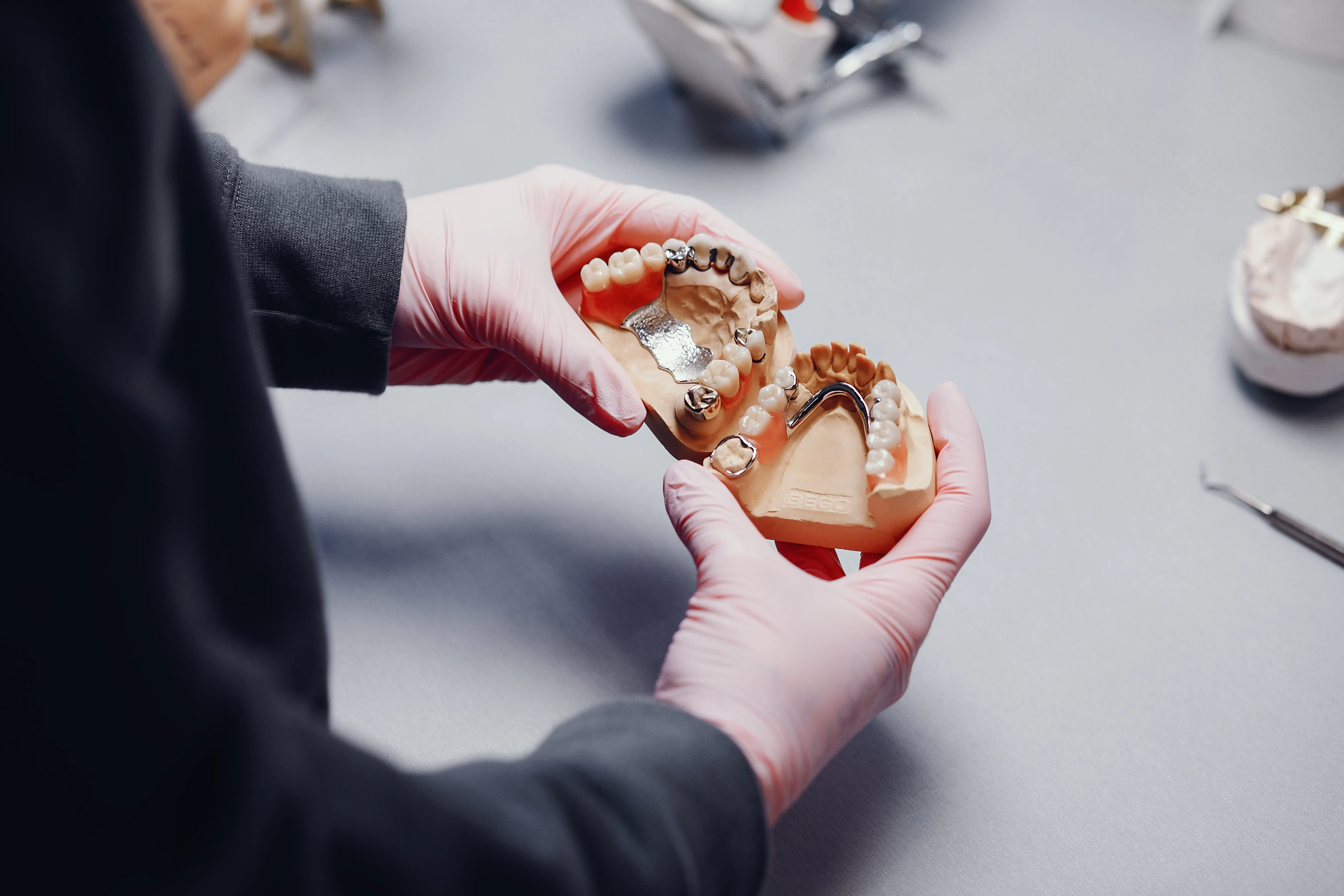
A dental bridge literally bridges the gap left by one or more missing teeth. A traditional bridge uses the healthy teeth on either side of the gap as anchors: we place crowns on those teeth and attach a natural-looking replacement tooth (or teeth) between them. The result is a fixed, stable restoration — no removing it like a denture.
We craft bridges from natural-looking, tooth-colored materials and shade them to blend with your smile, so your replacement looks and feels like a natural part of your mouth.
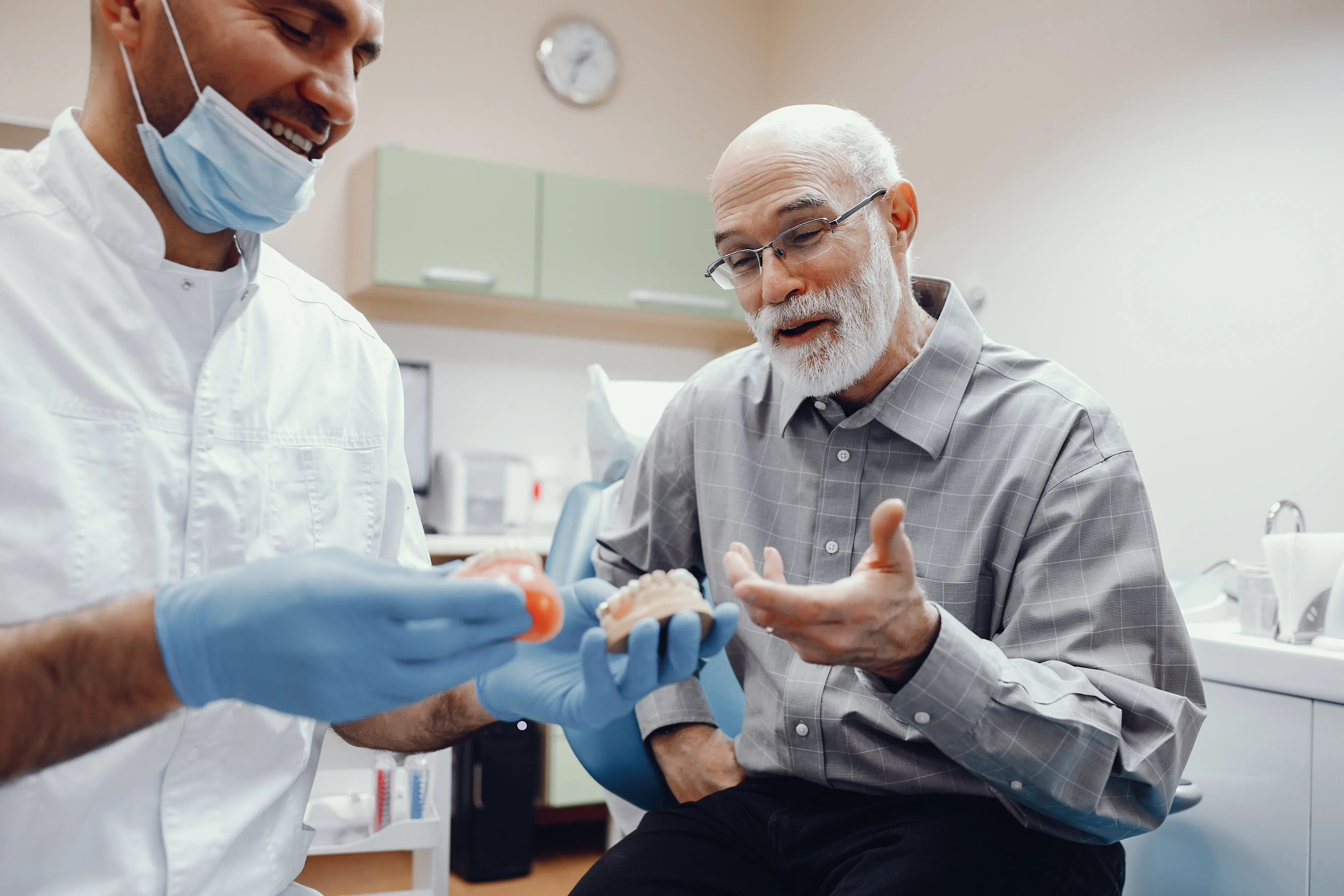
A bridge is one of several ways to replace missing teeth. Depending on your situation, an implant restoration or a partial denture may also be an option, and we'll walk you through what suits you best.


A bridge may be a great fit if you:
Note: We'll examine your smile and talk through all your tooth-replacement options so you can choose the one that fits your needs, health, and budget.
Replacing a missing tooth does more than complete your smile. It helps because a gap can:

Make it harder to chew and speak comfortably

Allow neighboring teeth to drift or tilt into the space

Affect your bite and how your teeth fit together

Change the look of your smile and your confidence

Put extra strain on your remaining teeth
Our practice is on the 18th floor at 8 S Michigan Ave, steps from Millennium Park and the heart of the Loop, making it easy to restore your smile close to work or downtown.
We welcome patients from across downtown Chicago, including the Loop, River North, South Loop, and West Loop, with convenient access by CTA, Metra at Millennium Station, and nearby parking.
Fills the gap with natural-looking teeth.
Lets you chew and speak comfortably again.
No removing it like a denture.
Helps keep neighboring teeth from shifting.
Tooth-colored materials blend with your smile.
Built to last for many years with good care.
A traditional bridge is usually placed over two comfortable visits.
Comfort note: Our comfort menu (noise-canceling headphones, Netflix, blankets, and more) is here to help you relax.

The cost of a bridge depends on the number of teeth involved, the material, and the type of bridge. Bridges are restorative care, and dental insurance often covers a portion. We're in-network with most major PPOs and will review your specific benefits with you before treatment.
To keep treatment manageable, we offer financing through CareCredit and Cherry, and members of our in-house membership plan receive 15% off treatments like bridges. We'll always give you a clear estimate up front.

A bridge is a reliable, fixed way to replace missing teeth, but a few things are worth knowing. A traditional bridge involves reshaping the anchor teeth, which is not reversible, and bridges may eventually need replacing over the years. Because a bridge sits above the gumline, it doesn't replace the tooth root, so the bone beneath the gap can change over time. Cleaning under a bridge takes a little extra care, and we'll show you how.
A bridge isn't the only option. An implant restoration replaces the root as well as the tooth and doesn't rely on the neighboring teeth, though it requires an implant to be placed first, which we coordinate with a trusted specialist before completing your restoration. A partial denture is a removable, often more affordable choice. We'll talk through every option honestly so you can choose with confidence.
A great bridge fits precisely, feels comfortable, and looks completely natural. We use a modern, full-mouth health scan for accuracy and comfort, and we take time to get the fit, bite, and shade just right, so your new smile feels like your own.
As a woman-owned, family-friendly practice in the heart of the Loop, we pair modern dentistry with genuine, personal care, and honest guidance on the best way to replace your missing teeth.

Founder & Lead Dentist, Dentistry at Millennium Park.
Last updated: June 2026
Meet Dr. Ranganathan Before
 After
After“ From initial concerns to a flawless, confident smile ”
 Before
 After
After“ The journey from correction to a natural, radiant finish. ”
 Before
 After
After“ A seamless transition from baseline to a custom-crafted smile ”
It depends on the number of teeth, the material, and the type of bridge. Bridges are restorative care and are often partially covered by dental insurance. We're in-network with most major PPOs, offer financing and a 15% member discount, and we'll give you a clear estimate first.
With good care, bridges commonly last 10 to 15 years or more. Their lifespan depends on the supporting teeth, your bite, and how well you clean around the bridge, which we'll show you how to do.
A bridge is fixed, uses the neighboring teeth for support, and is often faster and less costly up front. An implant replaces the tooth root, doesn't involve the neighboring teeth, and tends to last longer, but it requires an implant to be placed first. A bridge may be best when the neighboring teeth would benefit from crowns anyway; an implant may be best to preserve healthy neighbors. We'll help you decide.
For most people, no. We fully numb the area so you stay comfortable, and any mild sensitivity afterward usually settles within a few days.
You brush as normal and clean underneath the bridge using a floss threader or a water flosser, which keeps the gums and supporting teeth healthy. We'll show you a simple routine at your visit.
At our office on the 18th floor of 8 S Michigan Ave, steps from Millennium Park and the Loop. We welcome patients from across downtown Chicago. Call or text (224) 249-5977 or book online.
If you're missing one or more teeth, a bridge can restore your smile and your bite. Call or text us at (224) 249-5977 or book online, and we'll walk you through your options and take great care of you.
We are taking new patients in Chicago! We offer a wide range of dentistry services, including regular dental cleanings and check-ups, fillings and crowns.