Call or Text



Inlays and onlays are custom, tooth-colored restorations that repair a tooth too damaged for a filling but not damaged enough to need a full crown. An inlay fits within the tooth's grooves; an onlay also covers one or more cusps. Both are strong, natural-looking, and more conservative than a crown, preserving more of your tooth.
Inlays and onlays are custom-made restorations that sit right in the sweet spot between a filling and a crown. When a tooth has more damage than a filling can handle, but not enough to need a full crown, an inlay or onlay restores its strength and shape while keeping more of your natural tooth intact.
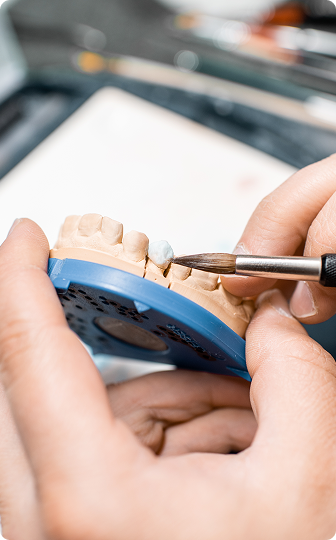
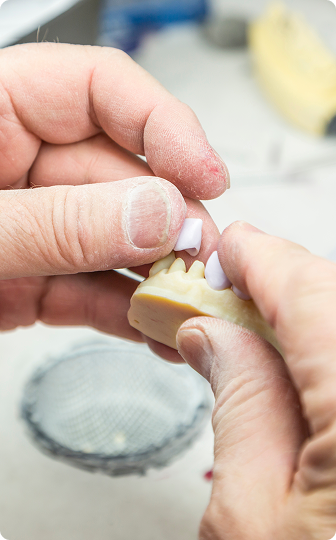
The difference is simple. An inlay fits within the grooves on the chewing surface, between the raised points (cusps) of the tooth. An onlay covers more area, including one or more of those cusps, which is why it's sometimes called a partial crown. We'll recommend whichever suits your tooth.
We craft inlays and onlays from durable, tooth-colored porcelain or ceramic and bond them securely in place, so the result is strong, natural-looking, and built to last.


An inlay or onlay may be the right choice if you have:
Note: We'll examine your tooth and recommend the most conservative option that will restore and protect it well, whether that's a filling, an inlay or onlay, or a crown.
It may be worth asking us about an inlay or onlay if you have:

A large old filling that's breaking down

Moderate tooth decay

A cracked or fractured tooth

Ongoing sensitivity in a heavily filled tooth

A worn-down chewing surface
Our practice is on the 18th floor at 8 S Michigan Ave, steps from Millennium Park and the heart of the Loop, making it easy to restore your tooth close to work or downtown.
We welcome patients from across downtown Chicago, including the Loop, River North, South Loop, and West Loop, with convenient access by CTA, Metra at Millennium Station, and nearby parking.

Preserves more of your natural tooth than a crown.
More robust and longer-lasting than a large filling.
Tooth-colored porcelain or ceramic blends with your smile.
Precisely made and bonded for an accurate fit.
Strengthens and protects a damaged tooth.
Holds its color well over time.
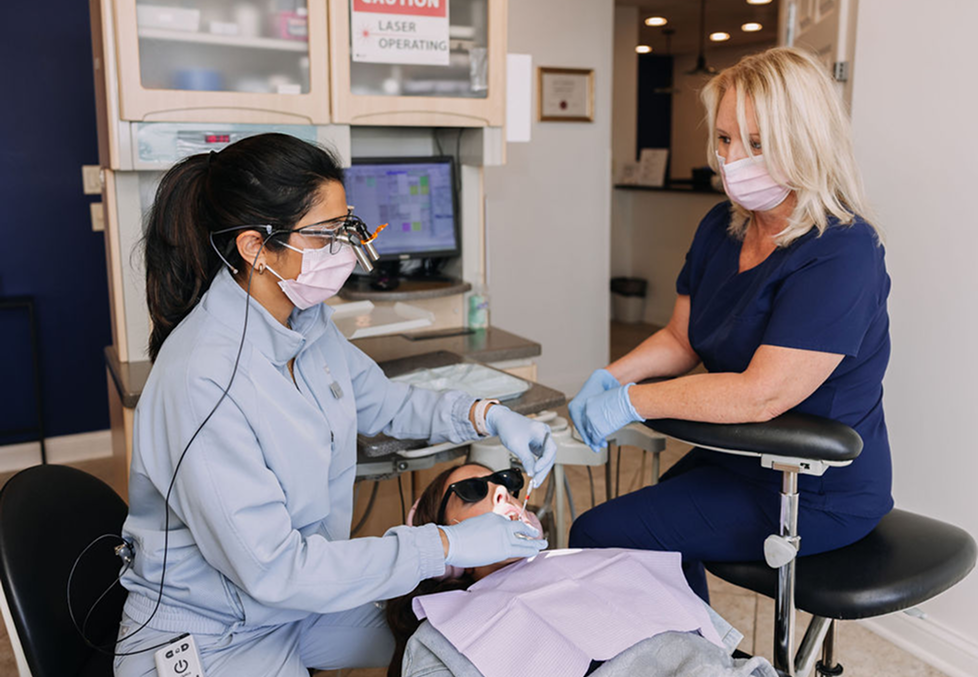
Restoring your tooth with an inlay or onlay is comfortable and straightforward.
Comfort note: Our comfort menu (noise-canceling headphones, Netflix, blankets, and more) is here to help you relax.

The cost typically falls between a filling and a crown, depending on the tooth and the material. Inlays and onlays are restorative care, and dental insurance often covers a portion. We're in-network with most major PPOs and will review your specific benefits with you before treatment.
To keep treatment manageable, we offer financing through CareCredit and Cherry, and members of our in-house membership plan receive 15% off treatments like these. We'll always give you a clear estimate up front.

Inlays and onlays are a reliable, conservative restoration, but a few things are worth knowing. Preparing the tooth involves removing decay or an old filling, which is not reversible, you may feel some temporary sensitivity afterward, and like any restoration one may eventually need replacing over the years.
An inlay or onlay isn't always the answer. For small decay, a simple filling is enough and more economical. For a tooth that's extensively damaged or weakened, a crown offers more complete protection. We'll always recommend the most conservative option that will restore and protect your tooth well.
A great inlay or onlay comes down to a precise fit and a conservative, tooth-preserving approach. We use modern digital scanning for accuracy and comfort, no goopy trays, and we take the time to get the fit, bite, and shade just right.
As a proudly woman-owned, all-female practice in the heart of the Loop, led by a woman of color, we pair modern dentistry with genuine, personal care and a focus on protecting your natural teeth.

Founder & Lead Dentist, Dentistry at Millennium Park.
Last updated: June 2026
Meet Dr. Ranganathan Before
 After
After“ From initial concerns to a flawless, confident smile ”
 Before
 After
After“ The journey from correction to a natural, radiant finish. ”
 Before
 After
After“ A seamless transition from baseline to a custom-crafted smile ”
Both repair a tooth, but they cover different amounts. An inlay fits within the grooves on the chewing surface, between the tooth's cusps. An onlay covers more, including one or more cusps, which is why it's sometimes called a partial crown.
A filling is best for small decay, an inlay or onlay is best for moderate damage that's too big for a filling, and a crown is best when a tooth is extensively damaged or weakened. We'll examine your tooth and recommend the most conservative option that protects it well.
With good care, they commonly last many years. Their lifespan depends on the tooth, your bite, and your habits, and we check your restorations at every visit so we can refresh one when needed.
For most people, no. We fully numb the tooth so you stay comfortable during treatment, and any mild sensitivity afterward usually settles within a few days.
The cost usually falls between a filling and a crown, depending on the tooth and material. They're often partially covered by dental insurance. We're in-network with most major PPOs, offer financing and a 15% member discount, and we'll give you a clear estimate first.
At our office on the 18th floor of 8 S Michigan Ave, steps from Millennium Park and the Loop. We welcome patients from across downtown Chicago. Call or text (224) 249-5977 or book online.
If a tooth needs more than a filling but less than a crown, an inlay or onlay may be the ideal fix. Call or text us at (224) 249-5977 or book online, and we'll take great care of your smile.
We are taking new patients in Chicago! We offer a wide range of dentistry services, including regular dental cleanings and check-ups, fillings and crowns.